
Places: The Bat Caves
Notes from the Jornada del Muerto

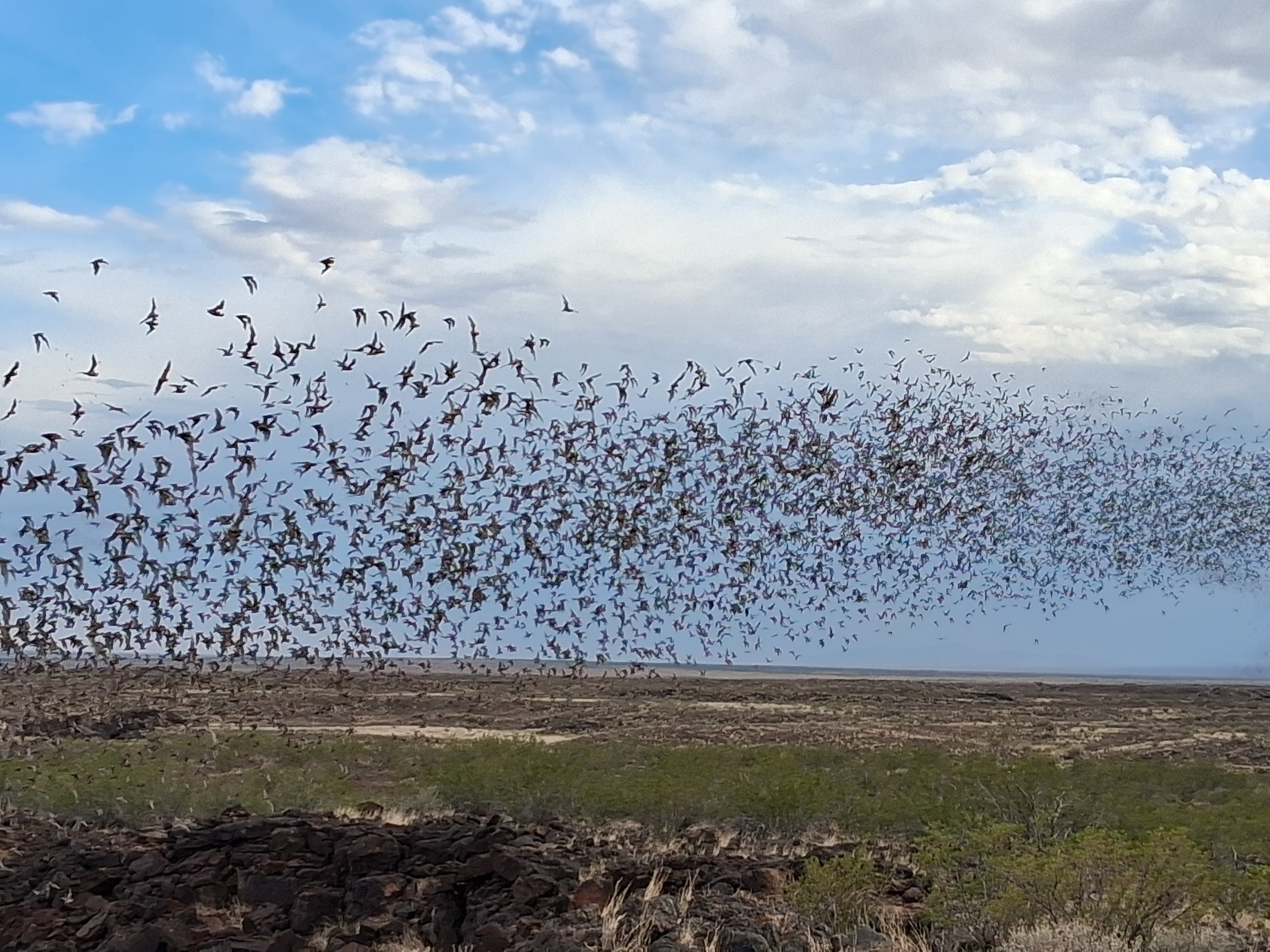
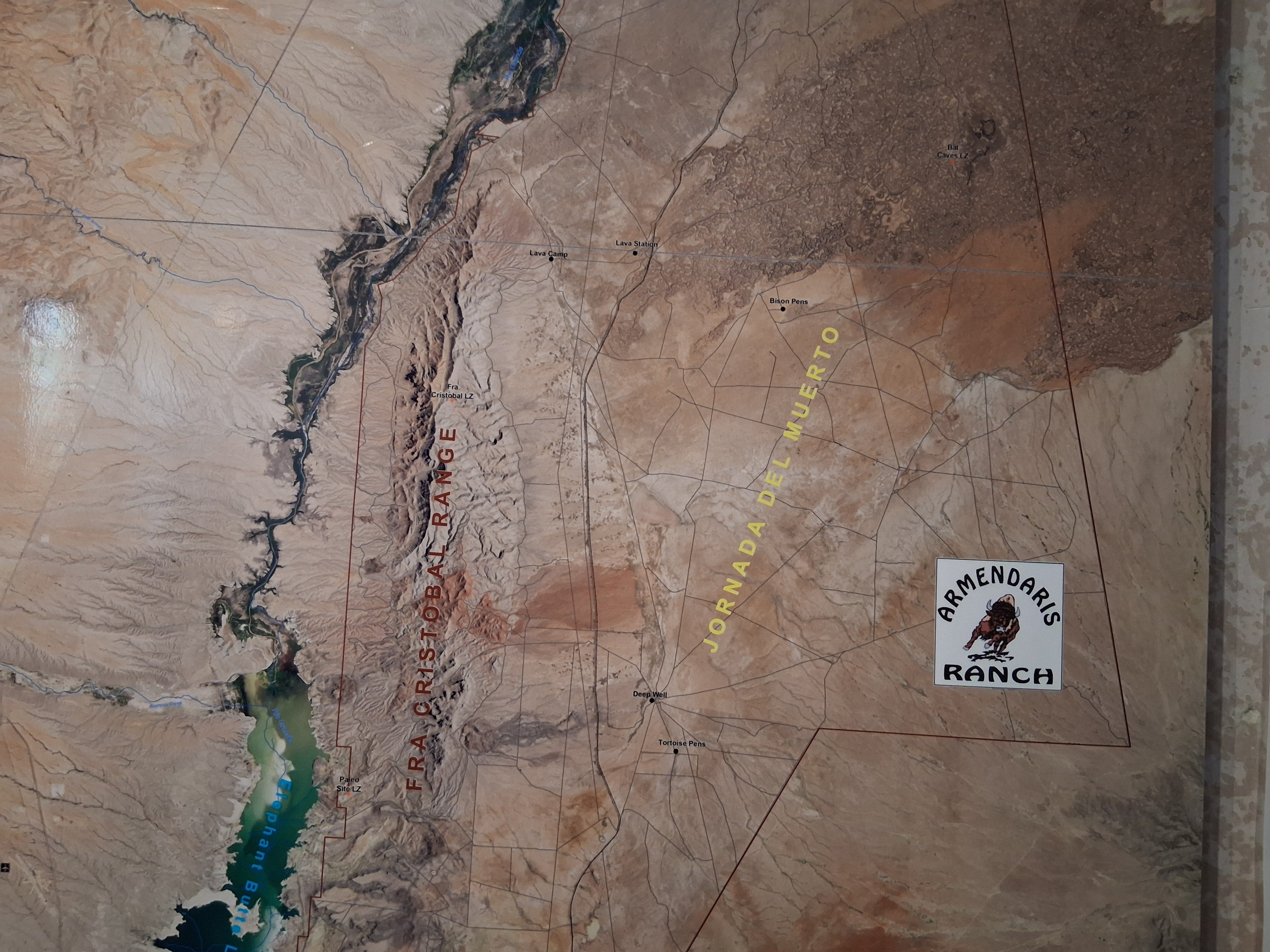
This journey begins in fire. Between 130,000 and 150,000 years ago, molten lava poured across what is now the Jornada del Muerto, between the San Andres Mountains and the Rio Grande Rift. Those eruptions left behind an underground landscape of lava tubes. I had never encountered the word volcanospeleology until recently, but New Mexico is full of volcanic caves, from El Malpais National Monument to the little-known bat caves on the Armendaris Ranch.
The Jornada del Muerto is the 90-mile waterless stretch between present-day Las Cruces and Socorro, New Mexico, dreaded by travelers for centuries. Local legend holds that Spanish explorers, seeing what looked like smoke rising from the desert, crossed toward it hoping to find water. Instead, they found black lava and discovered that the “smoke” was millions of bats pouring from the earth each evening.
Today roughly two million Mexican free-tailed bats occupy these lava tubes, making this the largest bat colony in New Mexico, even larger than Carlsbad Caverns. Their nightly exodus lasts more than twenty minutes.
In 1898, the guano was discovered and was moved by wagon to the nearby railroad line, where it went to California to fertilize the citrus fields. About 800 tons of guano were removed between the 1890s and 1930s.
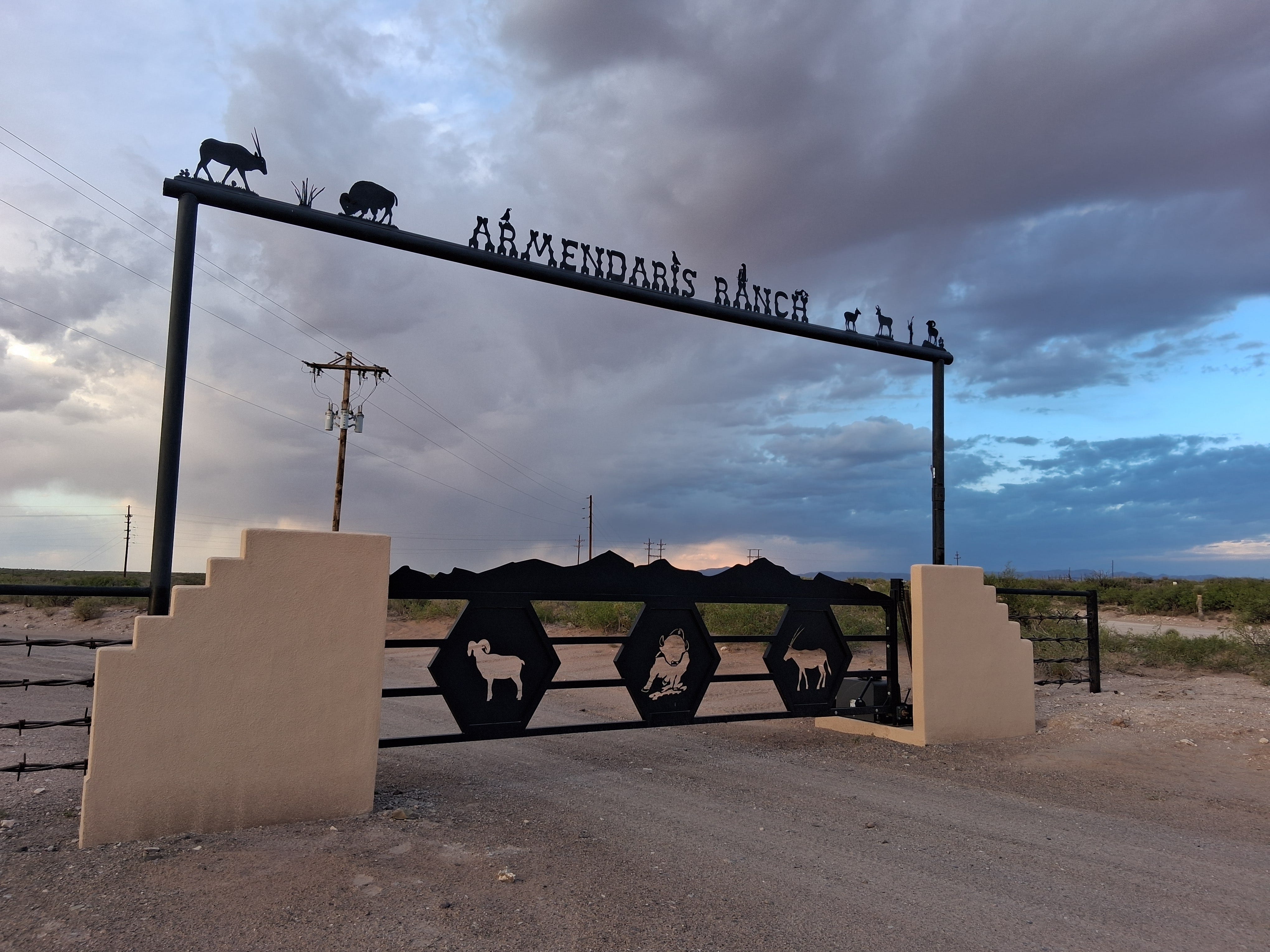
Today the caves lie within Ted Turner’s 364,000-acre Armendaris Ranch, now managed primarily for conservation and research. Public access is limited to guided tours, which is how two friends and I found ourselves bumping along dusty ranch roads on a recent summer evening.
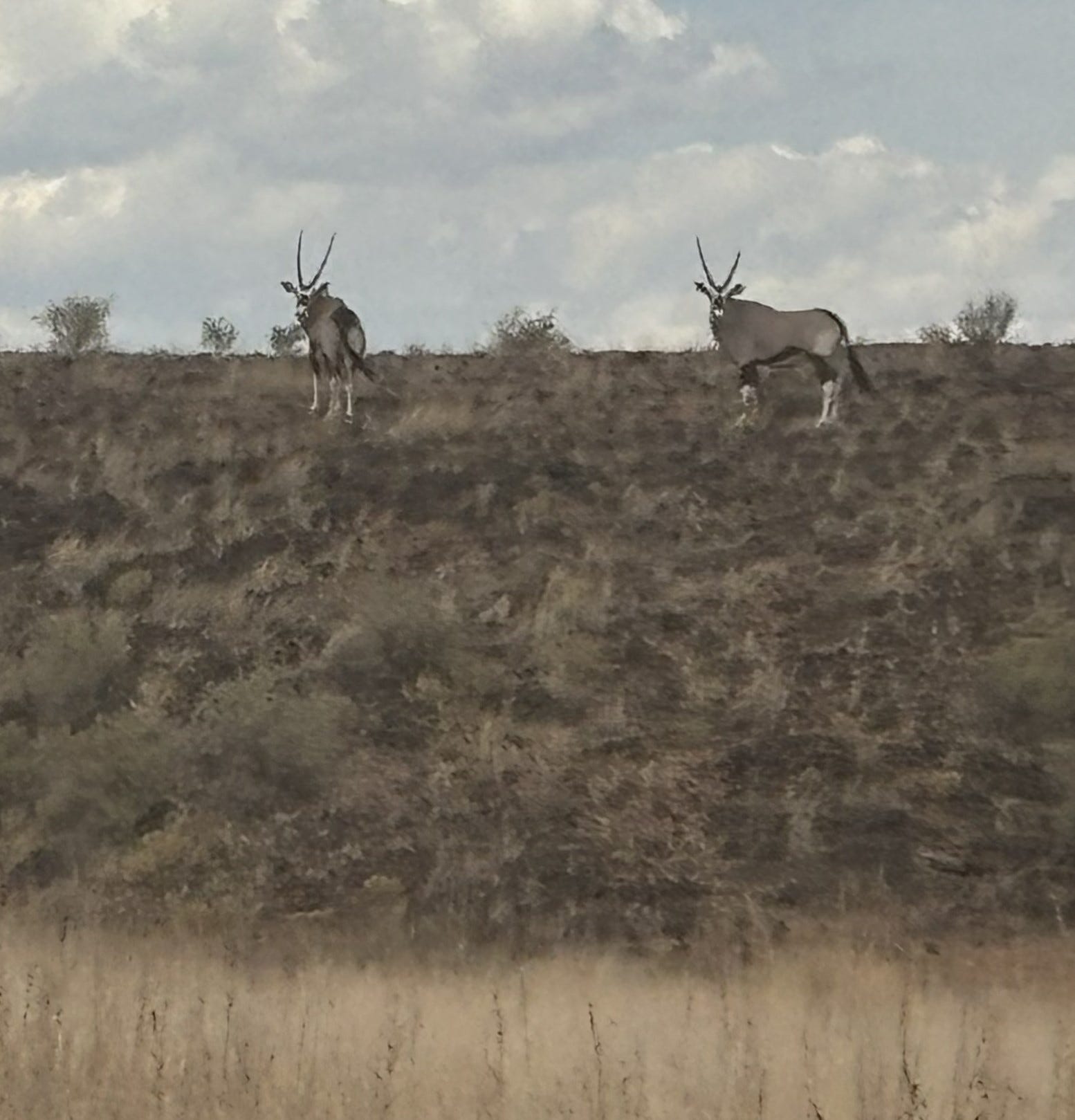
Our guide had a master’s degree in biology and was a font of knowledge about the wider region and its lesser-known creatures and trails. One of the more amazing evolutionary facts I learned was that the Western Diamondback rattlesnakes in the lava fields have evolved melanism, making them nearly black, to blend in. She regularly sees antelope and oryx, as we did that evening, and every now and then a mountain lion.
After two hours of dirt roads, we arrived at the lava tubes. There is a north and a south entrance to the tubes – more than 90 percent of the time the bats emerge from the south, so we walked down there to wait, carefully making our way across the lava to the edge of the rim.
Swainson’s hawks spiraled around the opening, and the high-frequency pitches grew louder. We smelled the strong ammonia from the cave as they began to flicker out; there is also a pair of skunks and a fox that sometimes lurks near the entrance, ready to pounce on bats that hit the wall or fall. A few brave souls came out first, and then it turned into a river of bats.
These bats are only females with their pups, who were born in the late spring and early summer, and learn to fly after five weeks. They sleep in a crèche apart from their mothers, and each singleton is identified by its mother either by its scent or cry. By the time we saw them emerge, the pups were flying alongside their mothers, eating up to half their body weight each night in insects.
In past droughts, the bats sometime emerged as early as 3:00 pm, because they needed to fly further to find enough insects.
European folklore often cast bats as omens of death, while the Maya revered the bat god Camazotz, associated with darkness and sacrifice. Standing at the edge of the lava tube, I found neither image persuasive. These felt like creatures of thresholds, emerging from hidden chambers beneath the earth each evening before disappearing again into the night. If this land feels rugged today, it is almost impossible to imagine crossing it on foot centuries ago. We spoke in whispers, trying to be respectful of their exodus. Even our guide, after eleven years on the job, was awestruck as they emerged.
They spiraled in different directions, with pairs of hawks hovering above them, as they made their way to the water. A few came back to the cave and divebombed the entrance – the whoosh they made sounded like arrows flitting past. As we drove back, the sunset lit up the edges of mountains, looking like snow, and the vast sky cycled through every shade of evening. We avoided the rain that was all around us but caught glimpses of distant rainbows.
We made it back to my cabin by sometime after 10:00 pm and sat outside another hour. I often see a few solitary bats flit about my front porch at night, hunting mosquitos or moths. Now I know where they come from.
Thank you Vanessa for organizing this adventure! It was a unique and profound experience indeed. I feel like we experienced one of the true wonders of the world in a very unforgiving part of the world.
I think about the miners and what they had to endure. I wonder what kind of protective gear they wore in order to extract the quana from the lava tubes. The sighting of the two Oryx was beautiful as well!!
Johnny
How beautiful! I have sought out such bat colonies, from Bracken Cave and Austin’s Congress Avenue bridge in Texas, to various caves and wats in Thailand, and in Central America. It is breathtaking watching the stream of bats snaking their way through the skies. Thank you so much for sharing your experience. I had not heard of these caves in New Mexico. I am unable to visit it as I am living out of the country, but enjoy the dozens of Pipistrelles foraging nightly along the banks of a river nearby.