
On Data Centers

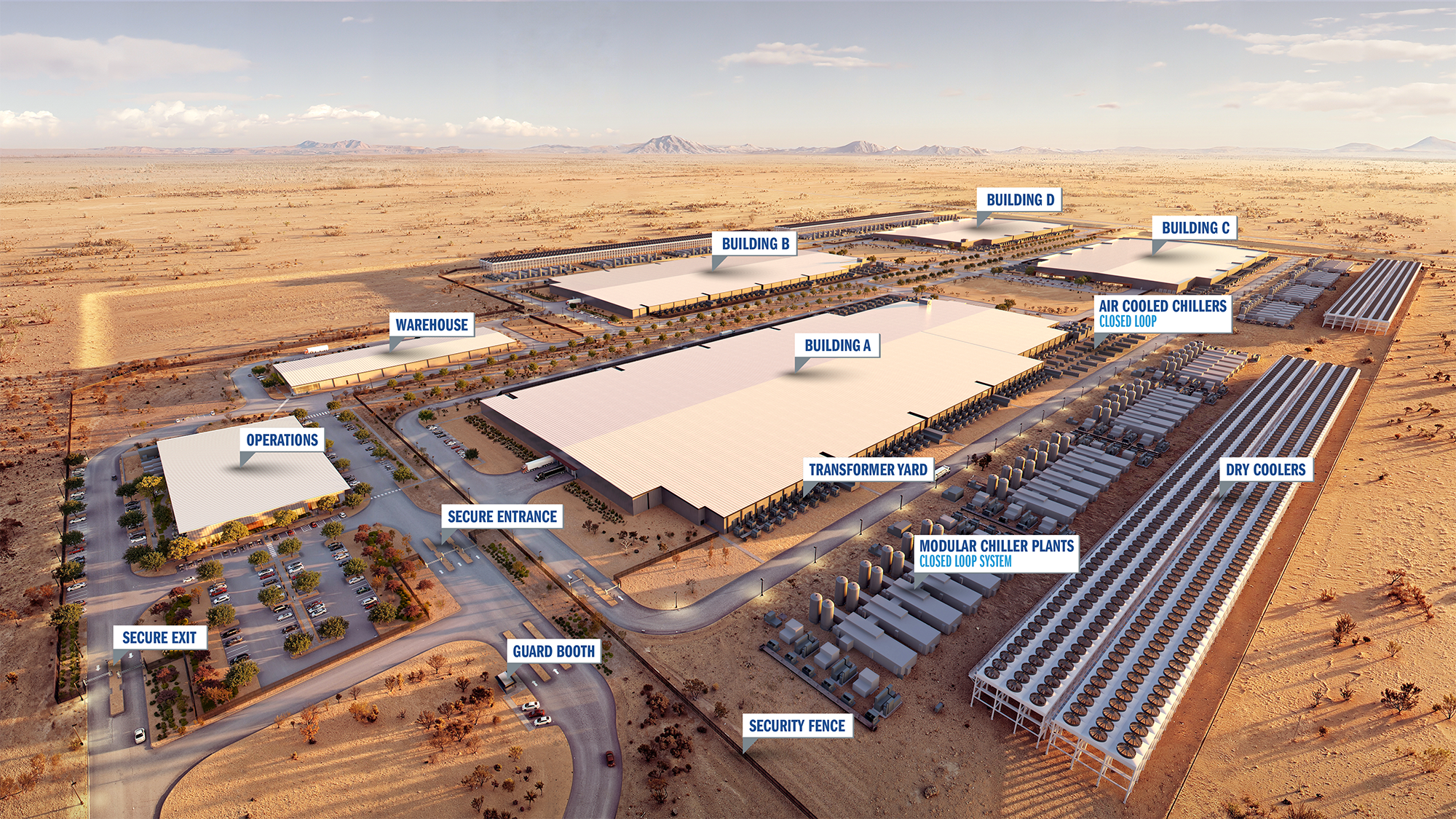
As I walked in the mountains on an overcast Friday morning, a playground taunt from decades ago began bouncing around my brain: “Boys go to Mars, to get more candy bars; girls go to Jupiter, to get more stupider.” Perhaps it was some conflation of Elon Musk’s new trillionaire status and the sight of the desert toward Santa Teresa being transformed by Project Jupiter, Oracle’s massive new data center, laying claim to this sandy edge of America.
One of my childhood friends became a rocket scientist and eventually worked for Elon Musk on his Mars project. We spent years debating technology, surveillance, and the costs of progress. He used to mock my fears of satellites watching over us and mass surveillance along the border – I would just laugh and ask where I could buy tin foil in bulk. More recently, he has admitted I may have been onto something.
I remain a techno-pessimist, even as I reluctantly adapt like the rest of us to new technologies. I especially think it is dangerous when we use tools to outsource our thinking. Of course, a computer often makes connections much faster than my brain ever could, but it doesn’t do it in the same circuitous (creative) way. I watch with alarm how my children’s generation has been sucked into a culture that is imposed on them rather than chosen freely. We have also entered the age of AI-driven warfare; Fort Bliss is slated to build a mega-data center in El Paso for national security purposes.
Between Oracle’s project (2.45 GW), Meta’s project (1 GW), and the Fort Bliss/Carlyle data center (3 GW), the proposed energy consumption would more than double the entire generating capacity of El Paso Electric, which today is closer to 2.9 GW. This is a massive leap forward, or somewhere, into uncharted territory for this region.
A year ago, I did not understand why data centers needed land here or would want to build in such an ecologically fragile place. Now I see that the three main needs for data centers are: staggering amounts of electricity, fiber connectivity, and cheap land that is easily developed. The water needs are significant, especially when you consider the water required to generate that electricity. Yes, Project Jupiter claims to be using a closed loop system, and that water top-offs would be “rare.”
Local communities in places like Arizona and Utah are finally pushing back against plans to build data centers in water-stressed zones. In fact, it seems that most Americans of diverse political persuasions oppose building data centers near their cities. But the deck is stacked against localities, unless counties like Socorro, New Mexico stand up to the pressure. Santa Fe County may also enact a year-long moratorium. But El Paso is politically weak; our leaders are easily wooed by the lure of outside investments, even if short-lived.
On Sunday, June 14, the Santa Fe New Mexican published an editorial on Project Jupiter, encouraging New Mexicans to speak out. The editorial stopped short of outright opposition, but its message was clear: New Mexicans should pay close attention to the long-term implications before these projects become a fait accompli. Meanwhile, Project Jupiter has taken out full two-page ads (in English and Spanish) in the El Paso Times every day for the past few weeks.

The debate surrounding data centers reminds me of another moment when technology arrived carrying promises of progress while distributing costs unevenly. Last week I reread Ernst Toller’s The Machine-Wreckers, written during his imprisonment in the early 1920s. The play reenacts the drama of the Luddite movement in early 19th-century England, when skilled workers rose up to protest industrialization.
It is much more than political theater. The characters are vividly modern and interwoven; members of parliament, the children of Nottingham, weavers, drunks, streetwalkers, union leaders, scabs and such. I first encountered the play through a translation produced by my brother and staged in Dublin in 2014. Toller knew firsthand about this tension between idealistic social change and the destructive forces that revolutionary struggles can unleash, from his time as a leader of the Bavarian Soviet Republic, the bloodshed that followed, and his sentence of high treason.
While the term Luddite is frequently misused in our vernacular to mean someone who is anti-technology, that simplified definition lacks accuracy.
The original Luddites weren’t mainly critiquing the “machines”; they were trying to draw attention to the byproducts of rapid shifts in technology, and defend those who suffered the greatest losses, in that case the artisans. Their protests, which were ultimately unsuccessful and quashed through infiltration, arrest, exile, and execution, still retain relevance today when we are considering the dawn of our AI age. Machine-wrecking was highly targeted, yet it was a capital crime.
The Luddites asked who paid the price for progress and who reaped the rewards. Two centuries later, the question remains. Should local residents bear the environmental costs of infrastructure that primarily serves a global market? Is “1,400 permanent jobs” an adequate answer? And can we imagine a future-oriented vision for the borderlands that does not depend on consuming ever more of our land, water, and energy?
You pose important questions, and, as usual, offer an intelligent, thoughtful post. We all need to seriously ponder the long-term effects of these centers.
Terrifying.