
Crossing Dreams

…Yet whenever I cross the river
On its bridge with wooden piers,
Like the odor of brine from the ocean
Comes the thought of other years.
And I think how many thousands
Of care-encumbered men,
Each bearing his burden of sorrow,
Have crossed the bridge since then.
Excerpt from “The Bridge” – by Henry Wadsworth Longfellow
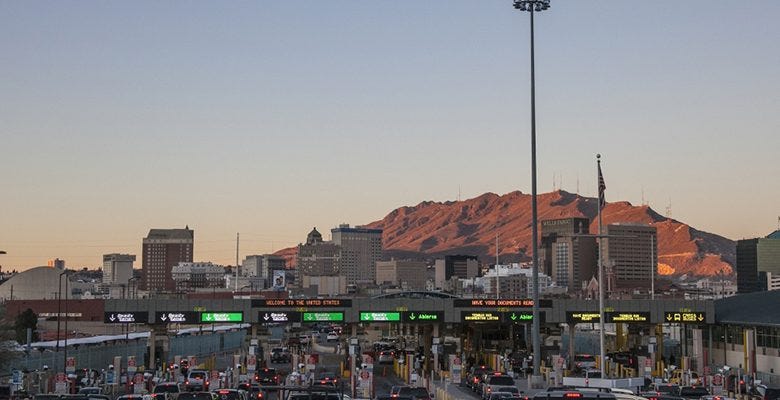
The bridges along the U.S.-Mexico border are the most congested land border crossings in the world, given that there is combined high volume with intense inspection. The San Ysidro crossing in San Diego-Tijuana usually tops the El Paso-Juárez crossings by volume, but we are well within the top three busiest crossings in the world. A stone’s throw from our downtown buildings.
If you are a numbers person, consider this: in 2024–2025, roughly 50,000 people crossed daily, along with about 35,000 passenger vehicles. This excludes more than 3,000 commercial trucks entering each day at the Bridge of the Americas, diesel engines idling for hours. Another 10,000 students - mostly U.S. citizens - live in Juárez and attend school in El Paso, waking before dawn to endure the commute.
In the 1990s, my father worked with the El Paso Foreign Trade Association to improve crossing efficiency. Their research suggested simple fixes, like stacking inspectors three deep and expanding primary inspection capacity, but they ran into a deeper reality: there was little institutional incentive to shorten the lines. Long waits, some officials believed, made smugglers nervous.
Barring access to expensive SENTRI passes, the experience remains a miserable part of living in a binational area for most.
I recently read “The Third Reich of Dreams,” Charlotte Beradt’s book, first published in 1966. She was a Jewish journalist during the Third Reich, and fled to New York City as a refugee in 1939. She spent years secretly collecting dreams of a wide swath of citizens and exiles. Hitler, as well as Goebbels and other figures of authority, appeared throughout. It is a terrifying look at how national trauma is internalized, and how thought control appears at the subconscious level. There were dreams of listening kitchen appliances (pre-internet), and even nightmares that dreaming had altogether been banned.
I’ve had recurring anxiety dreams for years about crossing borders, so I was very interested in this topic. My dreams play on different crossings, most often the return to the U.S., where everything becomes maze-like: I can’t find the right line, or I don’t have the correct documents. Later in my life my dreams shifted to separation from my children; of not being able to get back to where they were, as when I’ve had to call someone to pick them up from school because I underestimated a wait time.
In the 1980s, the crossing was not a big deal, and the lines were seldom long. You could go have lunch in Juárez and still make it back for the afternoon shift. My father would buy beer in Juárez, and then would run through the station where you were supposed to pay the tax on alcohol, something generally tolerated if it took too long for an agent to come around and collect it. The permissiveness was practical and the agents at the booths were all local.
One summer in college, I crossed daily on foot at the downtown bridge to work as a volunteer, and I wrote a piece that year, simply entitled “Crossing,” about the deceptive nature of moving through this boundary when the air, temperature, smells, and sounds were so remarkably similar.
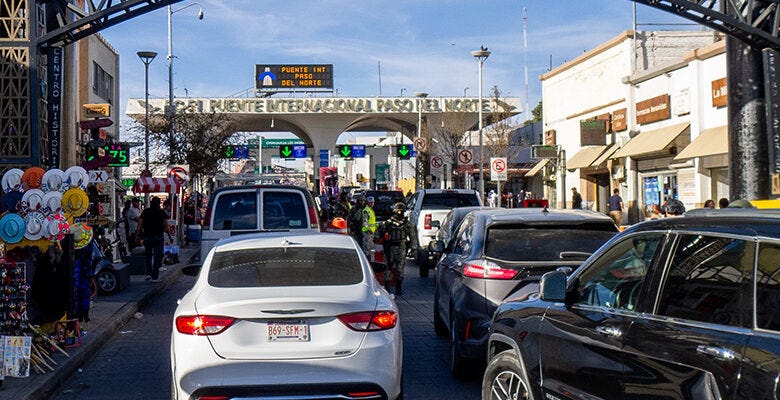
After 9/11, the lines ballooned to sometimes more than three hours. I was crossing most days for work, and it was a constant battle. The bridge line also required hypervigilance as a driver, to maintain a tiny space between you and the car in front of you, so nobody could cut in. Because I drove a reliable car and was comfortable on both sides of the border, I was often asked to drive visitors and sometimes dignitaries, which produced extra anxiety.
One evening, I drove three physicians from Stanford University over to a dinner in Juárez. One of the professors was from Egypt, which at the time was on a U.S. list triggering additional screening, being fingerprinted and photographed. I belatedly realized that, even though he lived in the U.S., he was going to have to go in for additional inspection, and began to apologize while in line. After ten minutes or so, he returned to our car, which was waiting in secondary, and we didn’t speak about it again. I can still feel the second-hand shame as I write this.
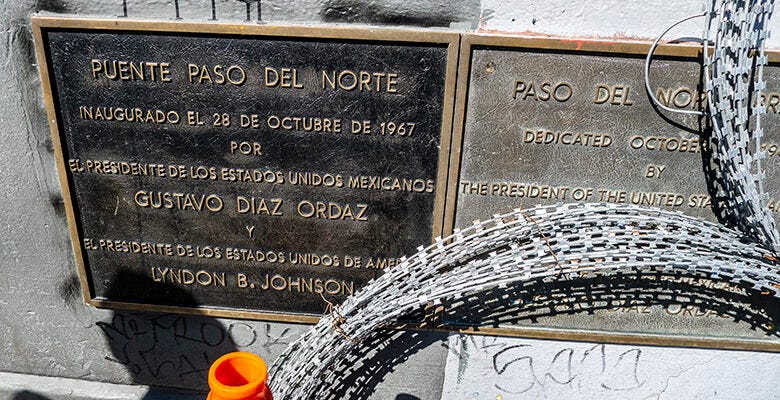
During COVID and subsequent migrant crises, conditions worsened: National Guard deployments, razor wire, and “metering,” where migrants were stopped at the top of the bridge, unable to set foot on U.S. soil. Families slept there, waiting for numbers to be called. It was a nightmarish period that exposed the system’s daily indignities.
The crossing experience has been highly sterilized. You can no longer cut in line; vendors have been removed from the bridges. On the U.S. side of the bridge, dogs may sniff around your vehicle, and agents may knock around its underside.
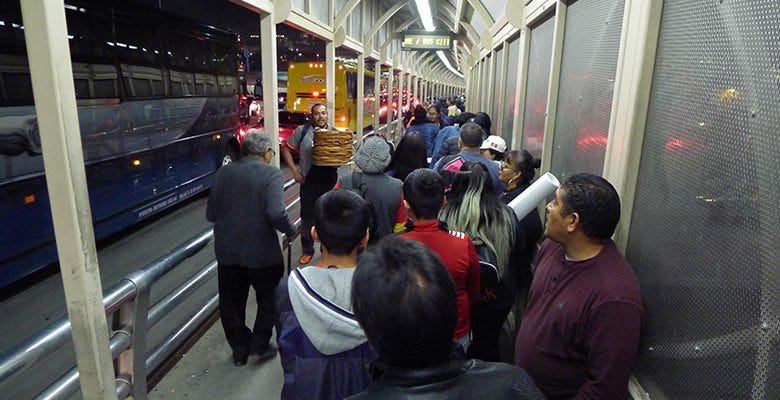
Today, I cross rarely, not more than once a month. My kids no longer want to go due to the wait times, no matter how joyful the prior experience before might be. I’m told not to bring my devices. But I’m a low-risk crosser with a verified and clean background. I don’t endure the daily border theater that can sometimes feel absurdist. I also usually cross on foot, where you get a window into the questions others are asked, if you are within earshot.
Are you educated?
No.
What were you doing in Russia in 2018?
Attending the World Cup.
Do you have anything to declare?
No.
I mostly stick to vague and acceptable answers, am friendly and usually consent to the photograph.
What was the purpose of your visit?
To visit a friend.
What are you bringing back?
Some cheese.
I don’t add “and accumulated particulate matter in my lungs.”
Unlike arriving at an airport, few agents ever say, “Welcome home.”
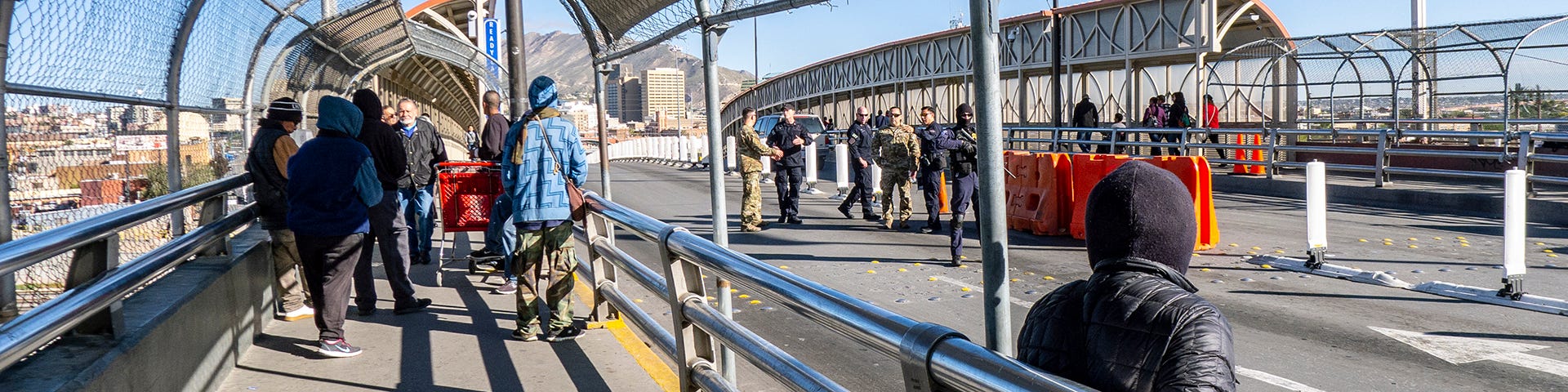
Border residents are conditioned to accept invasive policing from multiple agencies. We know our rights are limited; our possessions - and even our bodies - may be searched. The state imprints itself on us. I have sympathy for CBP officers tasked with an impossible job.
But ours is a deeply inefficient system, inflicting unnecessary suffering, pollution, and economic cost. In a region defined by movement, we should be able to do better, even in small ways like designing crossings that feel humane, perhaps with trees or artwork, or at least with rerouting commercial traffic to the outskirts of the city.
I occasionally have lovely flying dreams that are the antithesis of the anxiety I feel trapped in a bridge line. Soaring, tiptoeing across rooftops, swimming with my arms through the clouds.
But I’ve never flown over the border in my dreams. I always stop at that line.
Maybe someday I will cross.
Muy buen Articulo Vannesa, yo voy dos veces por semana y he notado que la larga espera en la línea prácticamente paraliza mis piernas y me estresa mucho, voy a una buena clase de taichi, pero ahora voy a reducir mis ideas a solo un día, hice la solicitud para la línea express desde hace un año y no han contestado no hay suficientes agentes y los que atienden se tardan mucho, hace unos días hice mas o menos 6 horas, no se porque tardaban tanto, cada vez lo que fue una comunidad binacional se esfuma y cruzar se vuelve una pesadilla