
Border-Crossing Objects (and Treasures)

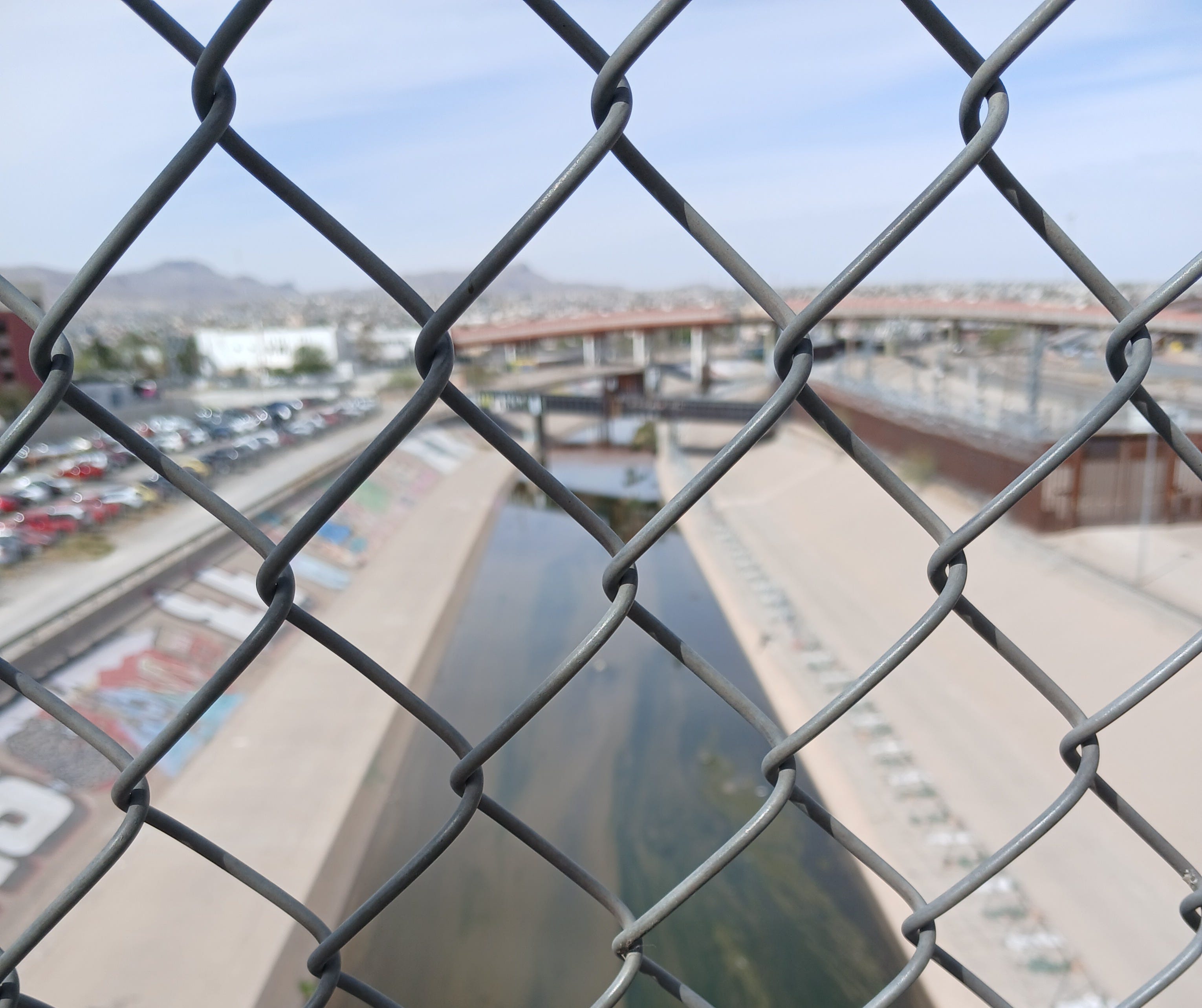
I travel light. When I’m asked what I have to declare, I can usually say “nothing.”
But that’s not quite true.
Borders can be both intensely hardened and at the same time, strangely imaginary. The way we’ve organized the world into nations is relatively new, yet we struggle constantly with things, and people, moving across them.
Most of the day-to-day items what we consume have crossed many borders. Our clothing is mostly not made in the United States. Our vehicles and airplanes are full of components and material that is sourced worldwide and cross multiple borders in a complex manufacturing dance.
Consider a standard running shoe, say from Nike. Material like rubber and textiles may be sourced from one country such as Thailand or South Korea; the shoe is likely manufactured in Vietnam or Indonesia at a contract factory, then shipped to a distribution center in the United States. While that’s pretty straightforward, the manufacturing process for something like an automobile or airplane is not.
Consider the F-150 pick-up truck. Marketed as quintessentially American, yet built from materials and parts that circle the globe: metals mined in Australia or Brazil, rare earths from China, petroleum from the Middle East. Components cross the U.S., Mexico, and Canada multiple times before final assembly. By the time the truck reaches a dealer’s lot, its pieces may have crossed borders dozens of times.
Objects move with astonishing ease.
And yet, when an object crosses a border with a person, it can take on a different kind of value.
I’ve held onto a few.
My first purse from a teenage exchange student from India, who lived in Ciudad Juárez and visited us in El Paso. It shimmered with tiny mirrors and bright threads. I brought it to my third-grade class along with a borrowed sense of the wider world.
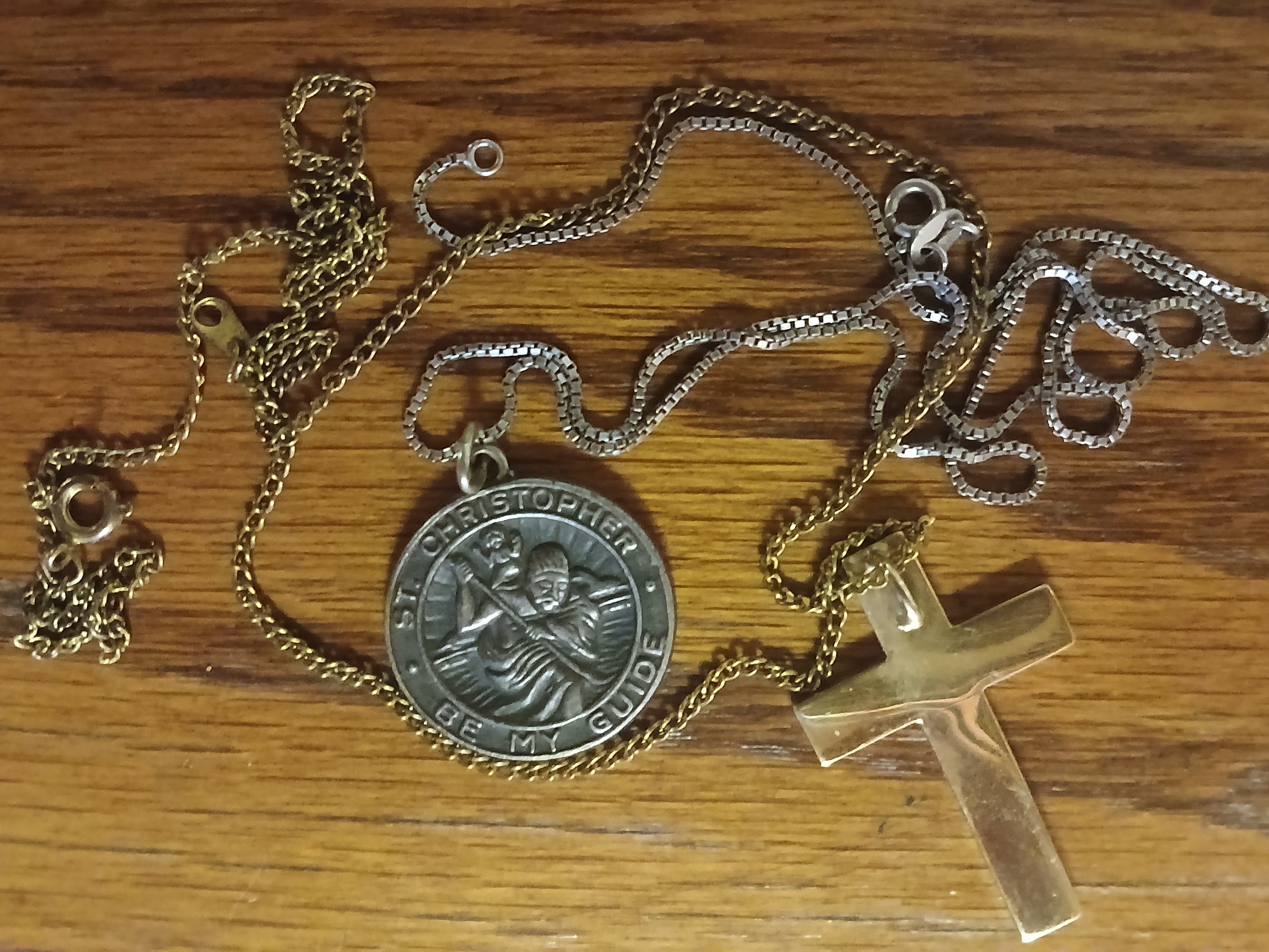
A St. Christopher medal from my grandfather, worn on my first flight overseas at sixteen. On the back: In case of an emergency, please call an Episcopal priest.
A small jar of sand from Saudi Arabia sent by Acevedo (Ace), a Fort Bliss soldier who was my pen pal during the first Gulf War. At eleven, I imagined it as something exotic, but it looked exactly like the sand in my backyard.
My dad’s sweater from Bolivia, still the warmest thing I own, carried across mountains and climates far from where it was first worn.
My grandparents’ dining room chairs from Ciudad Juárez, still sturdy, still in use, providing rest to guests from all over the world.
And my grandfather’s gold wedding ring, melted down by a jeweler in Dublin—recast into two rings for my brother and his wife, the remaining gold shaped into a cross that made its way back to me.
These objects have traveled. But more than that, they have been carried.
Our globalized hyper-capitalist system privileges goods and currency over people. El Paso and Ciudad Juárez are frequently defined by their logistics networks; twin cities that move products quickly and efficiently across borders. Customs brokers, truck drivers, warehouse managers: entire professions devoted to ensuring that things arrive where they’re supposed to go. We invest in our 401k and the money bounces all over the world with lightning speed.
We have less interest in doing the same for people.
Trade flows relatively freely; labor does not. Capital moves instantly; families wait years. We accept that a car part might cross a border half a dozen times, but a person crossing once can trigger scrutiny, detention, or denial.
People are definitely messier than a consumer good, and there is a myriad of reasons why people migrate – work, education, family reunification, economic opportunity, safety, climate change – reasons that often overlap. But it’s all doable at scale; what is lacking is the political will.
There is something fundamentally uneven about this system that allows goods to displace livelihoods, as when cheap corn from the Midwest flooded Mexican markets after NAFTA was passed in 1994, while restricting the movement of the very people affected.
If markets are truly global, why not mobility?
People are harder to sort than cargo. They arrive with histories, obligations, and hopes that don’t fit neatly on a manifest. But difficulty is not impossibility. Other countries experiment with different approaches—community sponsorships, regional resettlement, labor mobility agreements—imperfect but functional attempts to align the movement of people with the movement of goods.

In the second half of my life, I think I should naturally be paring down my possessions. I want to do more teaching. I want to make friends with younger people. The things I own should be fewer; the objects that I hold onto should be more intentional, sentimental. The only collection I want to grow is my trees, plants, cacti – things that are not so much mine, as mine to tend.
If I had to take only a few things with me, how would I choose?
This is not a hypothetical question for many people. Over the past year, I’ve spoken to many immigrants who have left their country; some quickly, fleeing danger, and others with the luxury of more planning. But all have felt the loss and the realization that they were doing something difficult; they have had to confront bureaucracy, interviews, judges, or even detention. Their possessions may be taken, discarded. Their former lives and assets may vaporize, or if they are left behind, they may never return to see them again.
If you had to leave your country with just a suitcase, what would you take?
Here’s a border=crossing irony: my dad was stationed in Germany in the early 1950s. Every German was poor. My family bought a large painting of a Bavarian house in the mountains. I didn’t notice until years later that on the back, in big black stenciled letters,was printed “US Army.” We owned a German painting painted on a US Army tent.